
English| EUR
Suggested for you
More currencies
Choose a language
Munich ranks among Germany's most cyclist-friendly cities, with an extensive network of dedicated paths and supportive municipal policy. This guide examines the infrastructure, safety conditions, and practical realities of navigating the city by bicycle year-round.
Quick answer
Yes, Munich is highly bike friendly, offering over 1,200 kilometers of dedicated cycling infrastructure accessible 24 hours daily at no cost. The city maintains separated bike lanes throughout the center, low-traffic residential zones, and continuous routes connecting major districts. Peak commuter hours between 07:00–09:00 and 17:00–19:00 see the heaviest cyclist traffic, so the recommended arrival window of 09:00–16:00 provides a more relaxed riding experience for visitors unfamiliar with local flow patterns.
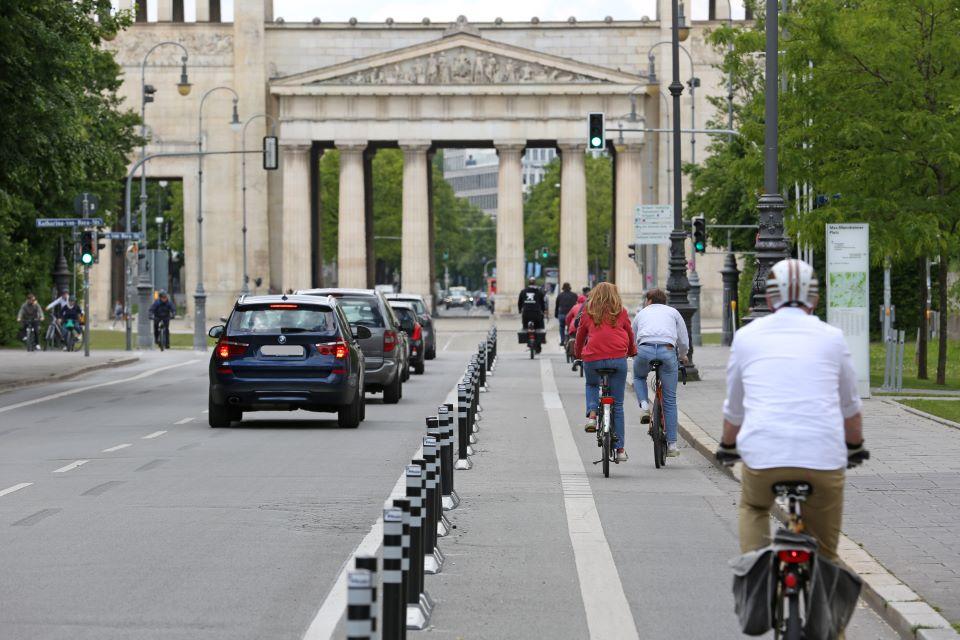
Munich moves 17 percent of all daily trips by bicycle—a figure that places it ahead of most European capitals and reflects four decades of deliberate infrastructure investment. The network extends from the Altstadt radially outward, following the natural geography of the Isar valley and connecting residential neighborhoods, business districts, and recreational green corridors without requiring riders to share space with heavy motor traffic. The question of whether Munich accommodates cyclists comfortably depends less on the presence of lanes than on their quality and continuity. Dedicated cycle tracks run along arterial roads like Leopoldstraße and Ludwigstraße, physically separated from car lanes by curbs or painted buffers. Residential streets in Schwabing, Haidhausen, and Glockenbach employ traffic-calming measures—speed limits of 30 km/h, chicanes, and prioritized cyclist right-of-way—that eliminate the need for painted lanes altogether. The result is a city where cycling feels less like navigating traffic and more like following a parallel transportation system. Route legibility matters as much as lane width. Munich's cycling network uses a unified wayfinding system with green signs indicating distance and direction to key destinations, eliminating the need for constant smartphone navigation. The Mittlerer Ring—the inner ring road—remains the primary barrier; crossings exist but require local knowledge or advance route planning to avoid extended waits at vehicle-priority intersections. The Isar River paths offer a scenic alternative for north-south movement, though they serve recreational riders more than commuters on a schedule. Weather resilience defines the practical limits of Munich's bike friendliness. Snow removal prioritizes cycle lanes during winter months, and the infrastructure remains accessible year-round. Autumn and spring bring the highest ridership volumes, while summer tourist traffic concentrates around the Englischer Garten and Museum Quarter. The city's cycling culture assumes year-round use rather than seasonal recreation, which keeps lanes maintained and visible even in months when casual visitors might expect them to be neglected.
“Munich moves 17 percent of all daily trips by bicycle—a figure that places it ahead of most European capitals and reflects four decades of deliberate infrastructure investment.”
Munich maintains an extensive cycling network designed to integrate bicycle traffic into the urban landscape. The city continues to expand its infrastructure through targeted initiatives to improve connectivity for all cyclists.
Radlnetz Munich development
18 percent modal split goal
Dedicated Radlschnellwege routes
50,000 bicycle parking spaces
Bicycle traffic signals
The best daily arrival window is 09:00–16:00 to avoid peak commuter traffic and ensure a more relaxed cycling experience. Munich remains accessible for cyclists throughout the year, though seasonal shifts impact comfort levels.
—
Plan your ride for after the morning rush to navigate bike paths with fewer commuters.
Warm, 15°C to 25°C
Long daylight hours make these months ideal for extended city exploration.
Cool to cold, 0°C to 12°C
Dress in layers and be prepared for potential ice or snow on paths.
Verdict: The best time to cycle is between 09:00–16:00 from May to June or September to October to balance weather and traffic conditions.
Public cycling infrastructure in Munich is accessible 24 hours a day, seven days a week. You can navigate the city's network of paths at any time.
Munich enforces strict cycling regulations to maintain safety and order on shared paths. Understanding mandatory rules for lights, lane usage, and right-of-way keeps you compliant and protected.
Everything you need to know about is munich bike friendly
Yes, Munich is widely considered a great city for cyclists due to its extensive network of dedicated paths and flat terrain. Many travelers find that the city is Munich bike friendly because it connects major parks and historical sites seamlessly.
There is no entrance fee to use the public cycling infrastructure, which is maintained by the city. Since is munich bike friendly infrastructure is free, you can access routes throughout the city at any time.
We recommend arriving between 09:00 and 16:00 to enjoy a more relaxed experience. This window helps you avoid peak rush hour commuter traffic, ensuring that is munich bike friendly streets remain easy to navigate.
Many areas of the city are designed to be accessible, making it a viable option for families who want to explore at their own pace. As you assess if is munich bike friendly, consider that public parks like the Englischer Garten provide safe, car-free zones perfect for younger riders.
Cyclists must follow standard traffic regulations, including using designated bike lanes where available and obeying traffic signals. Staying alert and respecting pedestrian areas ensures the city remains safe for everyone.
Using a bicycle is one of the most efficient ways to reach various Munich landmarks, such as the Marienplatz or the Residenz. Guided cycling tours are available to help you navigate the city efficiently while learning about its rich history.